

Vidhu Kota
Interview by Alex Kasel
Photography by Ezekiel Clare
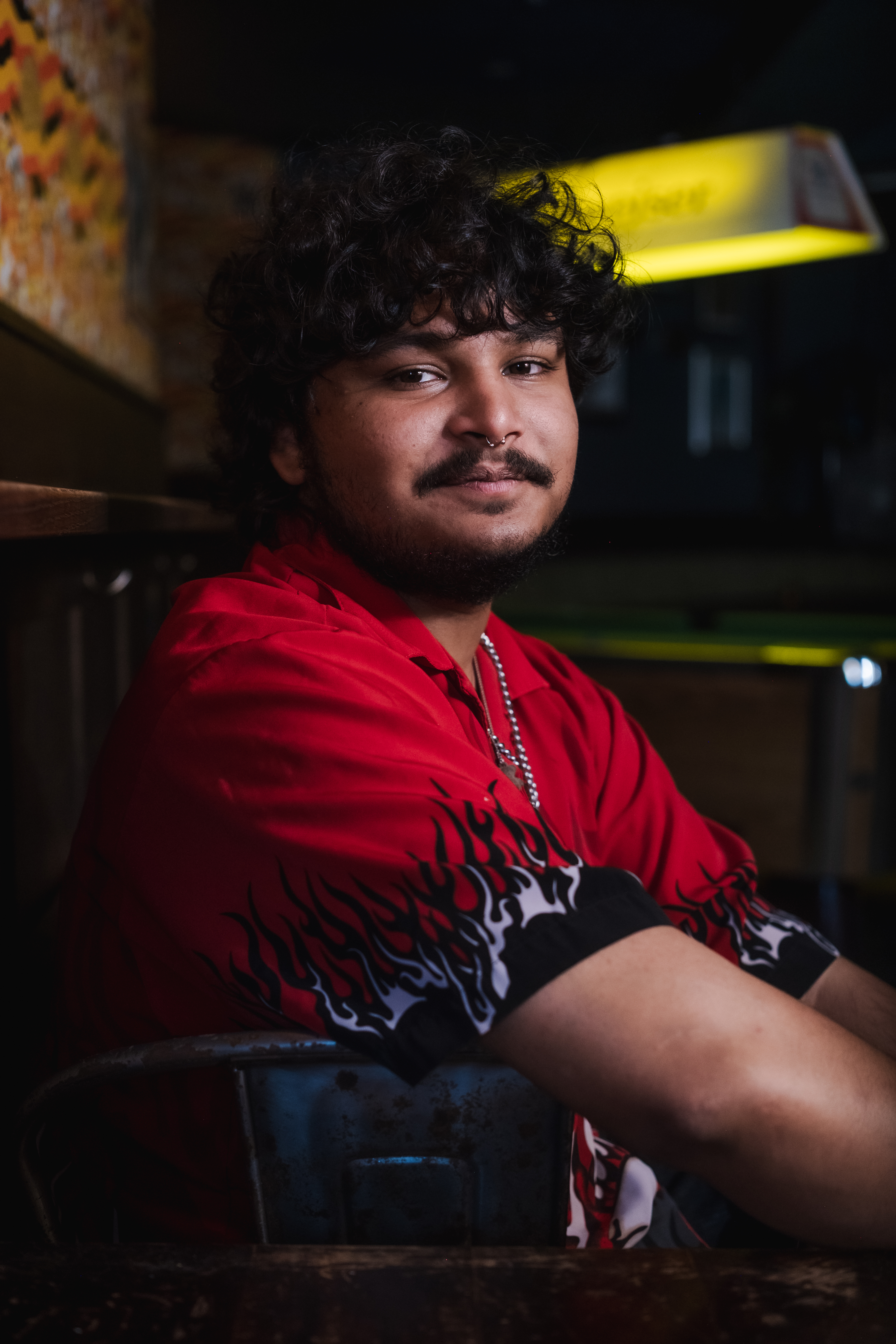
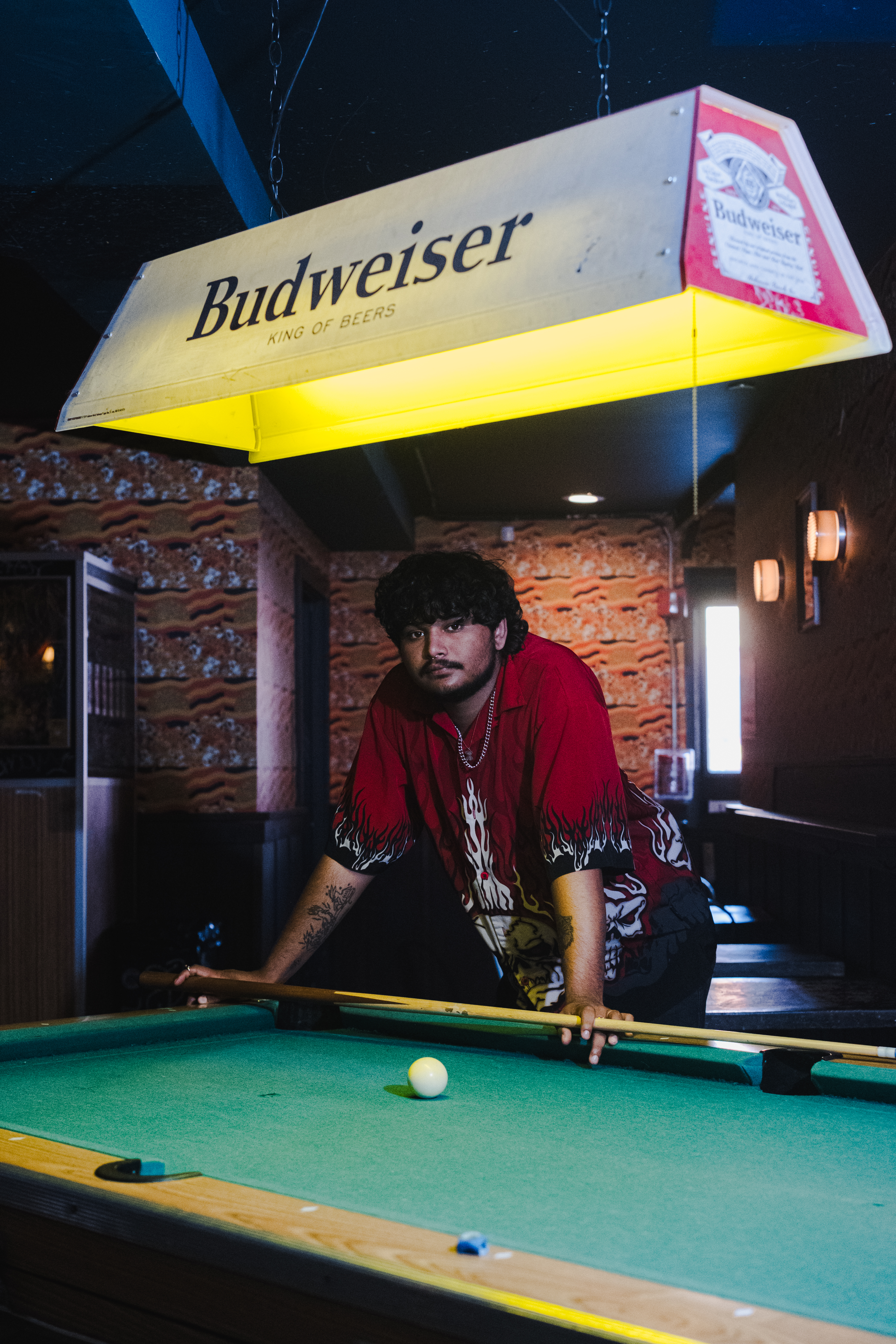
Vidhu Kota is a Brooklyn-based filmmaker, writer, director, and editor originally from New Delhi, India.
AK: Your film Fool’s Gold feels very personal—was there a learning curve to writing what you know?
VK: I think initially I was sort of restrictive and not specific on writing what I knew. I was taking more of the vibe of what I knew. But I realized the best movies feel personal in a way that's like, oh, this definitely happened to the filmmaker. I've been thinking about that a lot—how it can sometimes hurt work to try to appeal to too broad an audience, with too broad of a story, and specificity can have a much bigger impact. I was just on the YouTube post and we got like 104,000 views on there, so that's pretty cool.
AK: What’s your relationship to documentary work and stories about family?
VK: What I did before school was a lot of experimental work, but it was mainly non-fiction and poetry-based. Using that to do more classically narrative stuff was a cool transfer over, and one of the first actual documentaries I made in New York was about an Indian clothing store owner on the Lower East Side. The store doesn't exist anymore, but she came here a long time ago, and just connecting with her—not even about filming it and making it into a movie, but just talking to her and learning her story—impacted me so much, and she felt, in turn, like family. We still text every now and then. As for family, it’s important for me to talk about in my movies because I had a complicated relationship with my family, especially in terms of letting me pursue what I wanted to do. I take inspiration from that and use it as a form of therapy in a way.
AK: You’ve talked about empathy in your filmmaking. What’s your philosophy around that and how do you try to promote it in your films?
VK: For a long time growing up I had a difficult time with empathy; that was a skill that developed later in my life. So I think that's why it's important to me, and I hold it pretty close. In terms of movies having empathy, I think it's very easy for us to watch a movie and then use it as a mirror to see ourselves in either a character's position or just the general story's position. That’s why a lot of movies impact people so heavily—even if it's not directly, “Oh, I'm like this person,” it's more like the feeling of not getting what you want and then finally getting it. Most people can relate to that.
AK: It’s interesting that you say people use it as a mirror. Do you think that can be a positive or negative thing?
VK: Sure, yeah, in terms of projecting their own experiences onto it instead of actually taking what a director might mean. I've realized it doesn't really matter what the director wants the audience to feel, because the audience is an individual third party, and they're gonna feel whatever they're gonna feel. So that's why, whenever during film school people were like, “Will the audience get that?” I was like, I don't know, but I don't know if they're gonna get anything. I don’t really want to dwell on that. If they get it, they get it, and if they don't, they don't, and then they'll come up with their own description for what they just watched.
AK: What’s been the most exciting moment in your recent filmmaking?
VK: Whenever I've seen Fool’s Gold in a theater setting with people who don't know who I am. There's this part in the movie where everyone's tensed up. It's really cool to be like, oh, I was able to execute that well enough. It feels like proof, which I think I needed, especially coming out of school.
AK: And you're about to shoot a new film, Good Luck, Cheesecake!, which you wrote two years ago. What was the process like of translating it for your present self?
VK: The good thing about it being around for that long is, subconsciously, you think about it a lot. Even if you're not looking at the script, you still have the story in your head. We wrote it two years ago—me with my friend Rob, who also went to Pratt—and then revisited it last year. There weren't a lot of major changes, but I think it's better that I'm making it now than two years ago because I have more experience in directing and making a movie feel like something, and the team around me has also gotten better. Sitting on it helped; if I'd made it two years ago, I don't think I would have been able to do it justice.
AK: You've been recognized in a number of local and international film festivals, including the Yale Film Festival, Columbia National Film Festival, the Kasher film series, and the COVID International Film Festival. What’s next?
VK: I have the Asian American International Film Festival coming up in the second week of August. I'm excited because the movies playing in my block look so cool. That makes me feel like they have a standard to reach. I’d feel bad if my movie was the best of the block, because it's always nice to realize there are better movies, and mine was good enough to be with those great movies. Other than that, I'm probably moving back to India in September because of visa stuff. So I’m going to try and just network in India like crazy—it's a big fish/small pond situation. I'm trying to work with a lot of Indian hip-hop artists for music videos because that scene in New York is super close to me and to see people in my country do it is really cool. It's still new and it would be super dope to be there for that world right now.
AK: From language shifts to living room sets, there are a lot of relevant details in your work. What are you intentional about in your film process?
VK: Culture in general is really important to my film process—not only in narrative stuff, even documentaries or music videos. If there's a way for me to insert culture into that piece, I will do so. I did a music video for a rapper a year or two ago, and we opened it with a prayer in his mother's native tongue that she was doing with him. That translated into the whole video being about New York and being part of this bigger ethos that shapes you as you grow up. When I write, I'm intentional about curating the world building. Especially if it's culture related, then I go deep into my head, trying to visualize how that space looks and how the culture of the protagonist impacts the space, especially if it's a home. In music video stuff I try to do it to the best of my ability—obviously it's more about the music—but if I could, I would do it everywhere.
AK: Can you talk a bit more about why the home is important to you?
VK: I've had a hard time calling one place home. I'm talking to my mother sometimes, and I'm like, “Oh yeah, I'm gonna go home.” And she’s like, “Home? You're not going to India.” For me, New York is very home, because I've had growth that feels more exponential. The last five years I've changed so much so quickly—more than I did in my seventeen years in India. So that's why I feel so closely connected to New York, and I feel like I know it really well. But when I go back, I'm sure that'll change. It's difficult for me to pin down home as one place because growing up, I moved around a lot. I was in Delhi for the longest time, but even in Delhi we moved apartments every couple years. So that's why home is so important. When I'm writing about home, I want it to feel lived-in, warm, and textured.