


"Sour Dice" with Kasey Johnson
Interview by Alex Kasel
Photography by Heather Suarez, Alex Kasel, and Anna Montalto
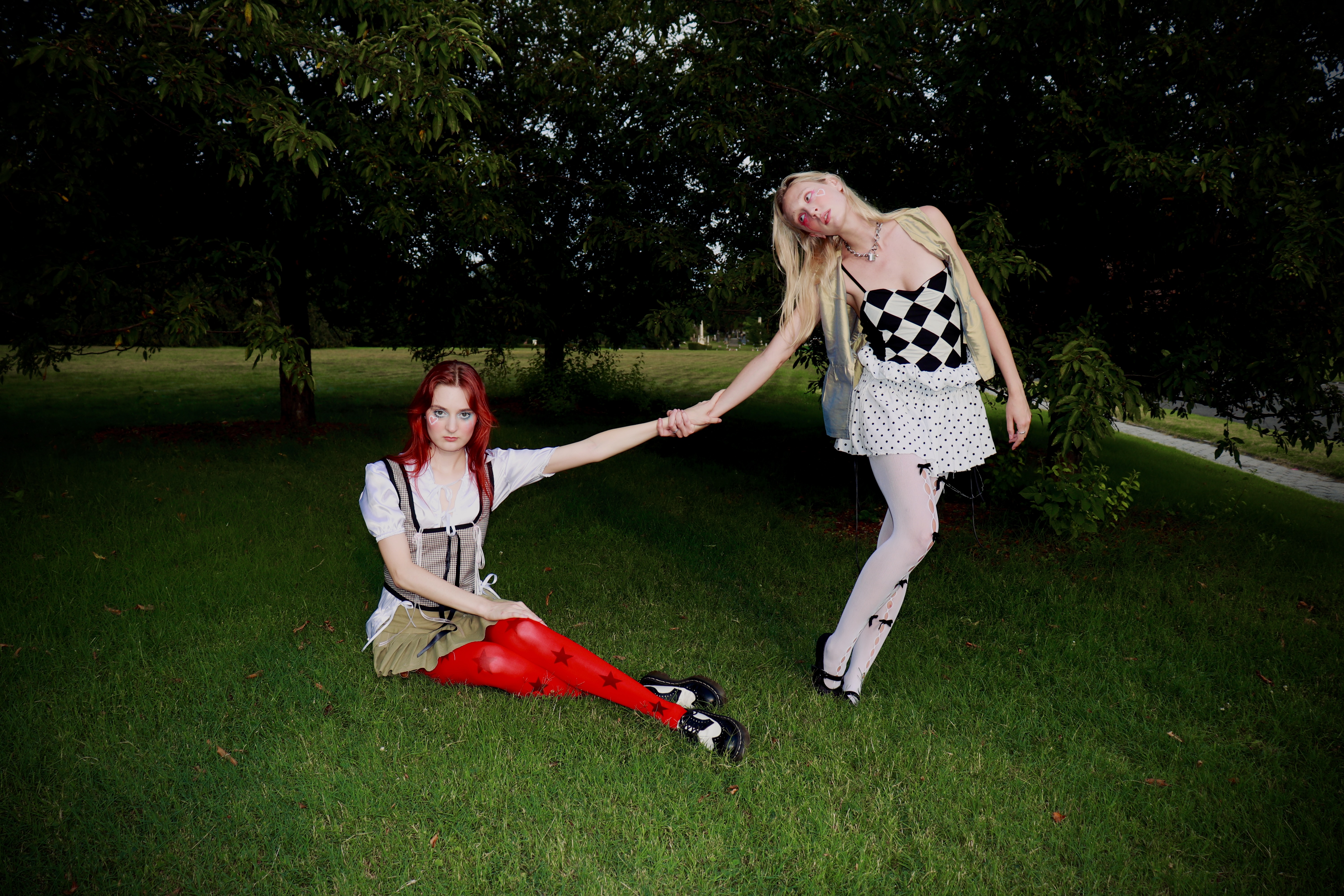
When did you start making clothes?
In 2020 during the pandemic, my grandma was just cleaning out her house, and she gave me a sewing machine, a serger, and all these nice scissors and fabrics. I just had so much time on my hands, so I learned. Then I was a big fan of this designer, Robert Reid, who I had seen online dressing some drag queens. And randomly, he posted that he was looking for an assistant, and he just hired me. I started working with him, and I feel like that's where I learned the most—how to work fast, how to fulfill orders, how to follow patterns and cut patterns. I worked for him for about two years; it was really fun. We made stuff for Billie Eilish and Azealia Banks, which was crazy. It was mostly bondage masks and gay sex gear. They’re really hard materials to work with, so going from those to better fabrics was a lot easier.
What are some of your style inspirations, whether that's other designers or just life experience?
I really like Madomorpho right now. I feel like she's kind of new, but I like what she's doing a lot. I also feel like I was never super feminine, but I also wasn't really a tomboy, and I like clothes that fit in the middle somewhere, which I think a lot of my stuff does. I’ll make this feminine bodysuit, but it's got these leather ties, or the siren dress that I've made is a long, kind of frilly dress, but has a more masculine neckline, and it has these ties that you can use to rough it up. I like the intersection of very frilly feminine stuff, and then kind of edgy more motorcycle punk things.
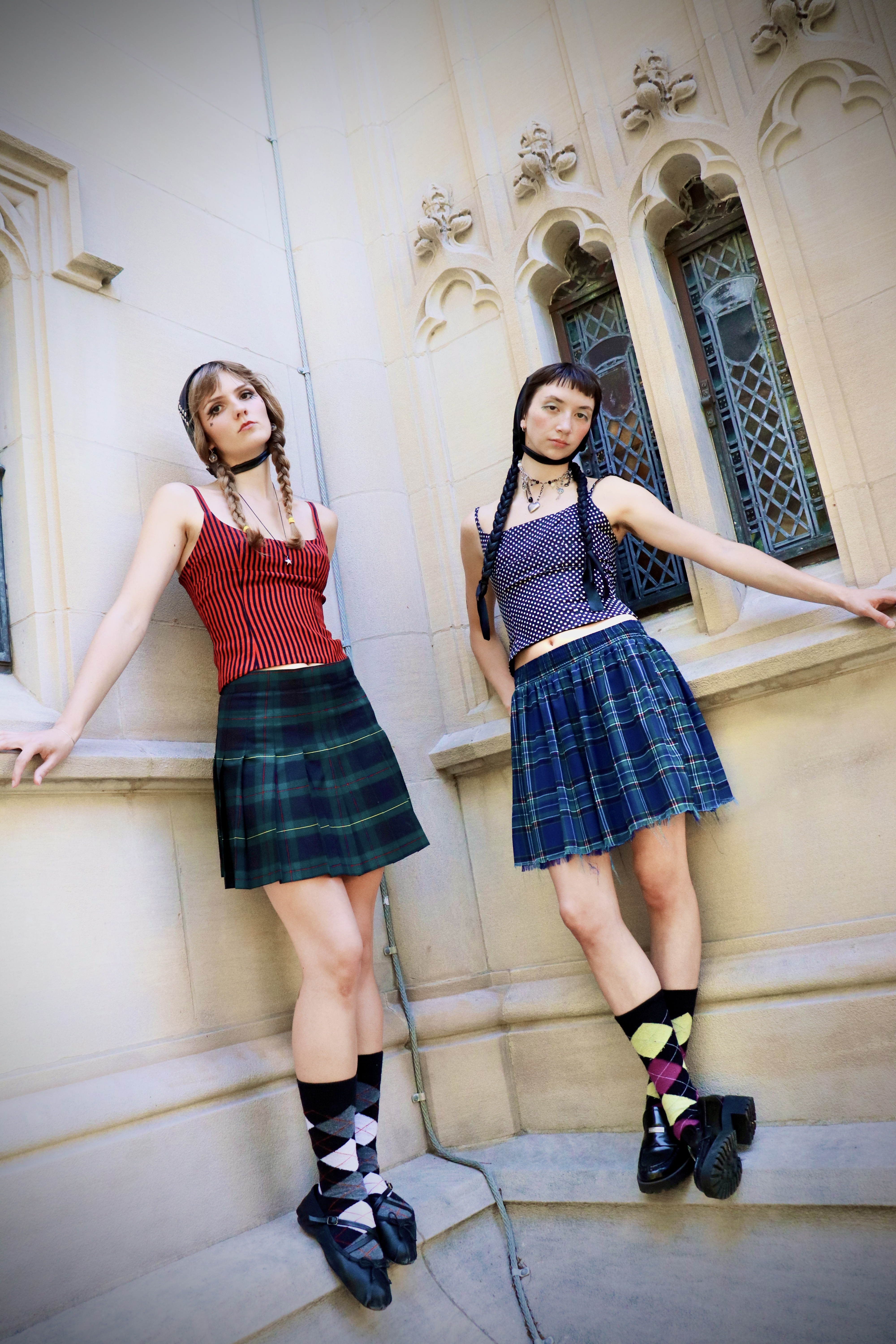
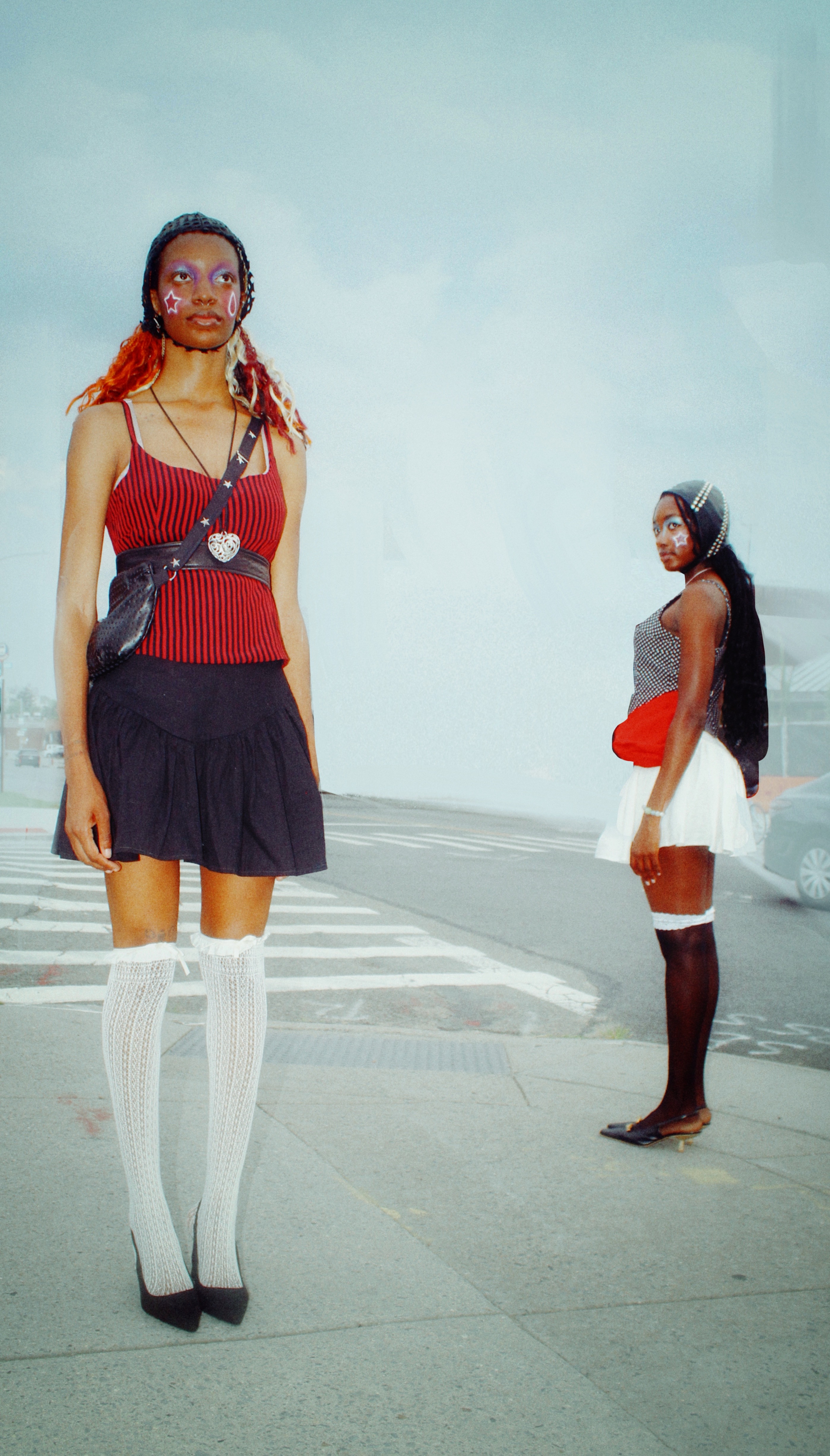
Would you say your experience making bondage pieces influenced that part of your style?
Definitely, I liked so much of what we made there, and it has informed a lot of what I do now with spikes and plaids and pattern going on. I like pattern, which is funny, because I don't wear a lot [...] I think it's fun. It’s also very versatile. I want to make statement pieces that you can wear all the time or to an event. This is kind of a funny story, but I wore [my Rosette jorts] to a work event with ballet flats and a Damson Madder top. And I came downstairs and my boss was like, “Wow, that's a real Man Repeller outfit!” And I was like, whoa. But I was kind of proud. I said, “Oh, I made half of it.” Like, that's kind of what I'm going for.
What were you doing out in LA?
It’s really important to me that people feel comfortable in what they’re wearing and I don’t think that’s possible if they can’t try it on. I think that’s a hindrance to my growth right now because I’m the same way—I wouldn’t buy a $200 dress that I can’t return if I can’t try it on. So, I was there scoping out a lot of boutiques, driving around, taking pictures, meeting people. I also went to my favorite fabric recycling store, Remainders Creative Reuse in Pasadena.
Do you want to get a studio assistant?
I do—I have someone who helps with ecommerce, but I haven’t launched a lot of stuff recently, so she is kind of just on call. But right now my studio is pretty tiny so I can’t really have another person in there with me. Hopefully I can expand, and then I would love to get an assistant. Cause that’s how I got better at sewing; that’s how I learned.
Since this interview, Kasey has upgraded to a bigger studio space.
You're working on getting into stores, and you might want some help in the studio. What else are you looking for right now?
I would love to do another show. I'd love for someone else to pay for it. That's kind of the only thing holding me back right now. I really like being a part of photo shoots and seeing how other people use my clothes and create looks. They do more than I could even imagine, which is really fun. I'm also working on an Instagram series where I partner with some influencers, fashion people, and give them five minutes to try to style my look in a small business or a thrift store. So [I’m] promoting that small business or promoting sustainable fashion, and seeing how other people wear my clothes.
What’s your advice for people who want to do this too?
Make friends. Don't be afraid to follow everybody on Instagram. Be nice to people. Sometimes I work with people who don't treat me very kindly, and I'm not gonna work with them again—the same thing could happen to anyone. Respect people's work, respect people's time. People give me crazy deadlines, and I'm like, “Hey, come on.” Also, film everything that you do, post on Instagram, be vulnerable. People like to see your successes and your struggles, and know that you're a person.
What’s been the hardest part so far?
Holding myself accountable because it is just me, and I have to remind myself sometimes [to not be] too stressed out about this. You literally don't have to be doing it. This is a choice. This is a passion. If it's stressing you out, stop. But it is what I really want to be doing, so if I'm taking too long of a break or not fulfilling orders in a good amount of time, I have to hold myself accountable, because no one else is going to.
Each of your collections has a distinct theme. Do you think about it collection by collection, or what’s your process?
I do think about it collection by collection. The Romance collection was really cozy and cute, with the deer, pink, polka dots, stripes, and pajama stuff. I'm definitely inspired by what I see [around me], and also the silhouettes of the pieces. So sometimes I'll just love a shape like the camisole and I'm like, cool, so I'm gonna make this in 20 different patterns. I want to get more cohesive with it, but I think it is what I'm going through in the time, and also my forever inspirations: whimsical patterns, Renaissance, poofy Bridgerton silhouettes—those are always in the back of my mind.
What's your favorite part about being in this industry in New York? And what's a pet peeve or something that often gets in your way?
There's been a lot of occasions where I'm walking down the street, or I'm at a bar or a show, and someone's wearing something I made. Most of the people that buy my stuff are in New York, California or Texas, and I'm always sending stuff just a few blocks away. So seeing someone out wearing my things is always like, oh, I'm real. It's very validating. Something that gets in my way is space. I would love to be able to lay out all my fabrics somewhere and just work like crazy, but New York is tiny, and I can't afford a bigger studio just yet, so I'm limited to what I have, which also allows me to be creative too.
Since this interview, Kasey has upgraded to a bigger studio space.
How did you finance your first show?
Just through sales. Every dollar I've made from Sour Dice I've put right back into it, which I'm very fortunate to do because I have had a job at the same time, it all goes back into it. But, yeah, it was just like my show was in 2024. I hadn't really made any big financial purchases since I started in 2020 so that was about all the money I had made went right towards the show. I think art doesn't pay for a long time, and then, if you're lucky, it pays a lot. I have a lot of discipline when it comes to finances and stuff.
How do you feel about trends?
I've always liked and enjoyed trends, but I've just been a thrifting girl my whole life, so I've never bought into trends. My stuff has some trendy elements, though, like the polka dots and the bows.
Once you know what goes into creating something, you can't look at anything the same. In terms of expanding and knowing that one day I will have to get stuff manufactured if I want to expand, I'm doing a lot of research with people I know in New York who work with manufacturers to make sure I'm working with someone who pays people a livable wage and is conscious of their business practices, because there is sustainable fashion out there, and my stuff will always be small batch. I also like making something that you can wear in a bunch of ways. Like, this corset is reversible, and the plaid bikini.
I always want to make sure it's done in the most ethical way possible. Knowing what goes into it, how could you be comfortable with it being done any other way?
The challenge always is in the waste, even when you buy deadstock fabric, from small businesses, or in the smallest quantities, you’re always going to have waste. I’ve been trying to think of creative ways to use that, and I’ve spent a lot of time making clothes with scraps, and now I’m making it into furniture, like little ottomans and pillows that I sell for ten bucks on Facebook Marketplace. It feels like a nice way to help someone get cheap decor for the home and also use these textiles so they’re not thrown away.
Since I didn’t go to fashion school and learn about textiles, it’s been a lot of trial and error on my part just trying stuff out like will this fabric work, or I’ll use a pattern made for stretch fabric with a woven fabric, and it totally doesn’t work, but sometimes it does! Also unfortunately, you don’t always know the compositions of the fabrics you’re working with, especially if you’re getting them secondhand. So learning what [certain fabrics] feel like and look like to make the best estimate of what I’m giving people has been really interesting to me.