"Coney Island" with Keri Sheheen and sideshow performers.
Interviews by Kayla Gaisi
Photography by Kevin Gutoskey and Ezekiel Clare
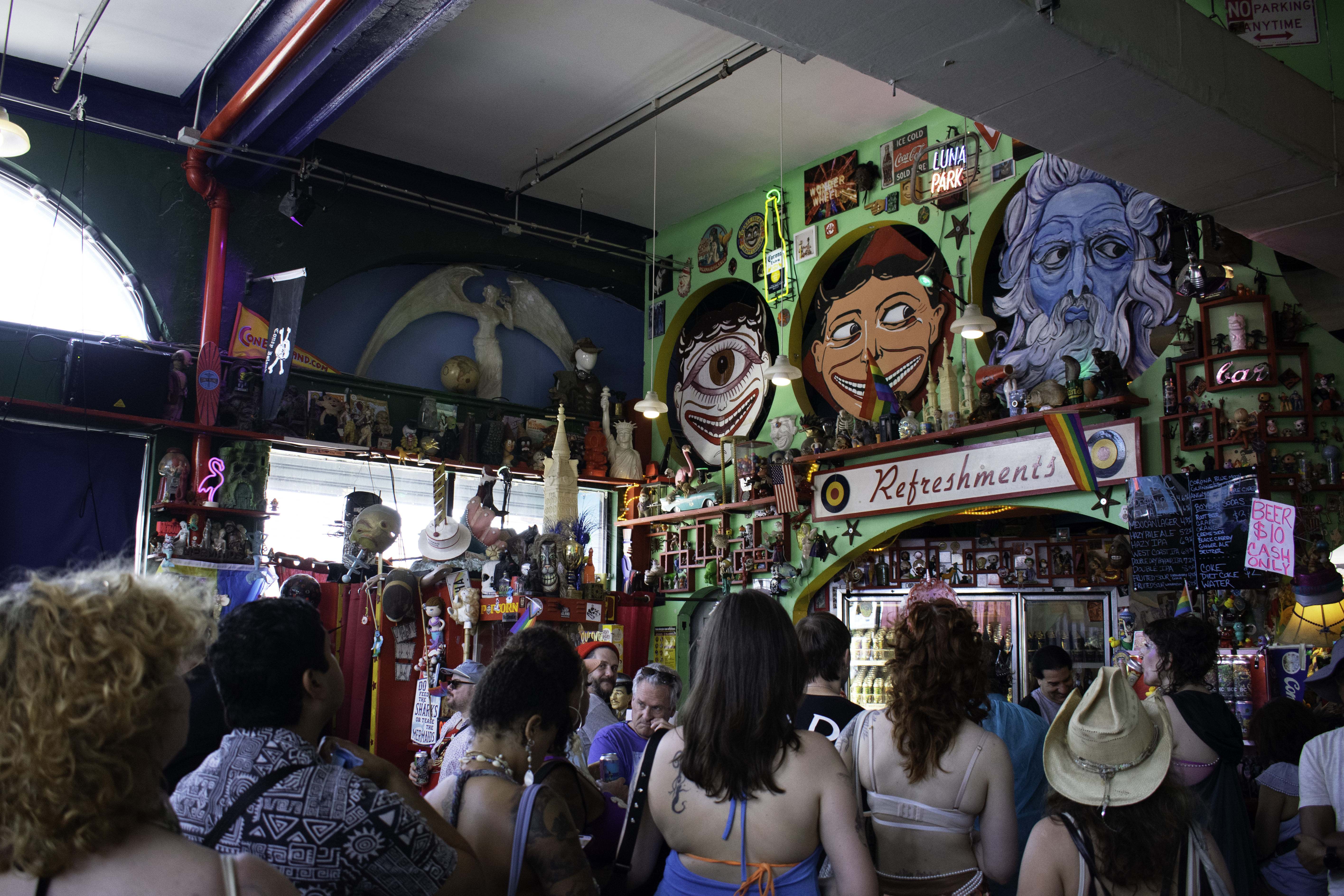
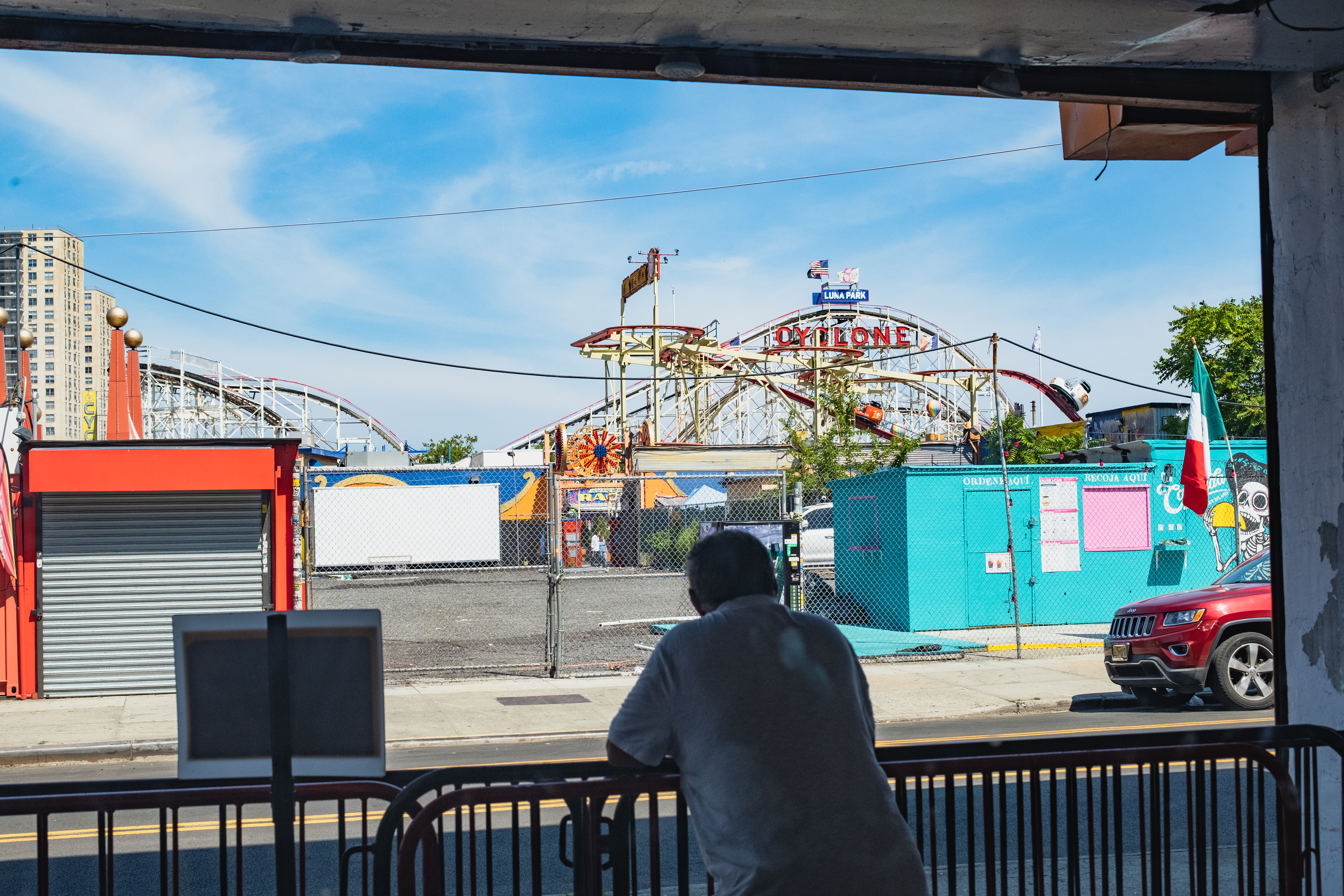
Summer in south Brooklyn always includes a venture out to Coney Island. Taking the N (or D or Q) all the way to the end of the line, you can watch from the elevated track as sidewalk turns into beach, and beach into ocean—by New York standards, the edge of the world. Away from the polished skyscrapers of the city, Coney Island invites you to indulge in amusement, to dabble in the surreal and the strange. Since the turn of the 20th century, curious visitors have been lured down here to watch the circus sideshows that once lined the boardwalk. Today only one sideshow remains, housed in the historic Coney Island USA building at 1208 Surf Avenue. This summer, I got the chance to tour the building and speak with some of the people who work there, including Mermaid Parade banner artist Keri Sheheen, and several of the sideshow performers whose daily grind keeps the art form alive. From them I also learned about the ongoing fight to save the amusement district from a developer’s plans to build a casino. Read on for more about the artistic legacy of Coney Island and the community’s efforts to preserve it.
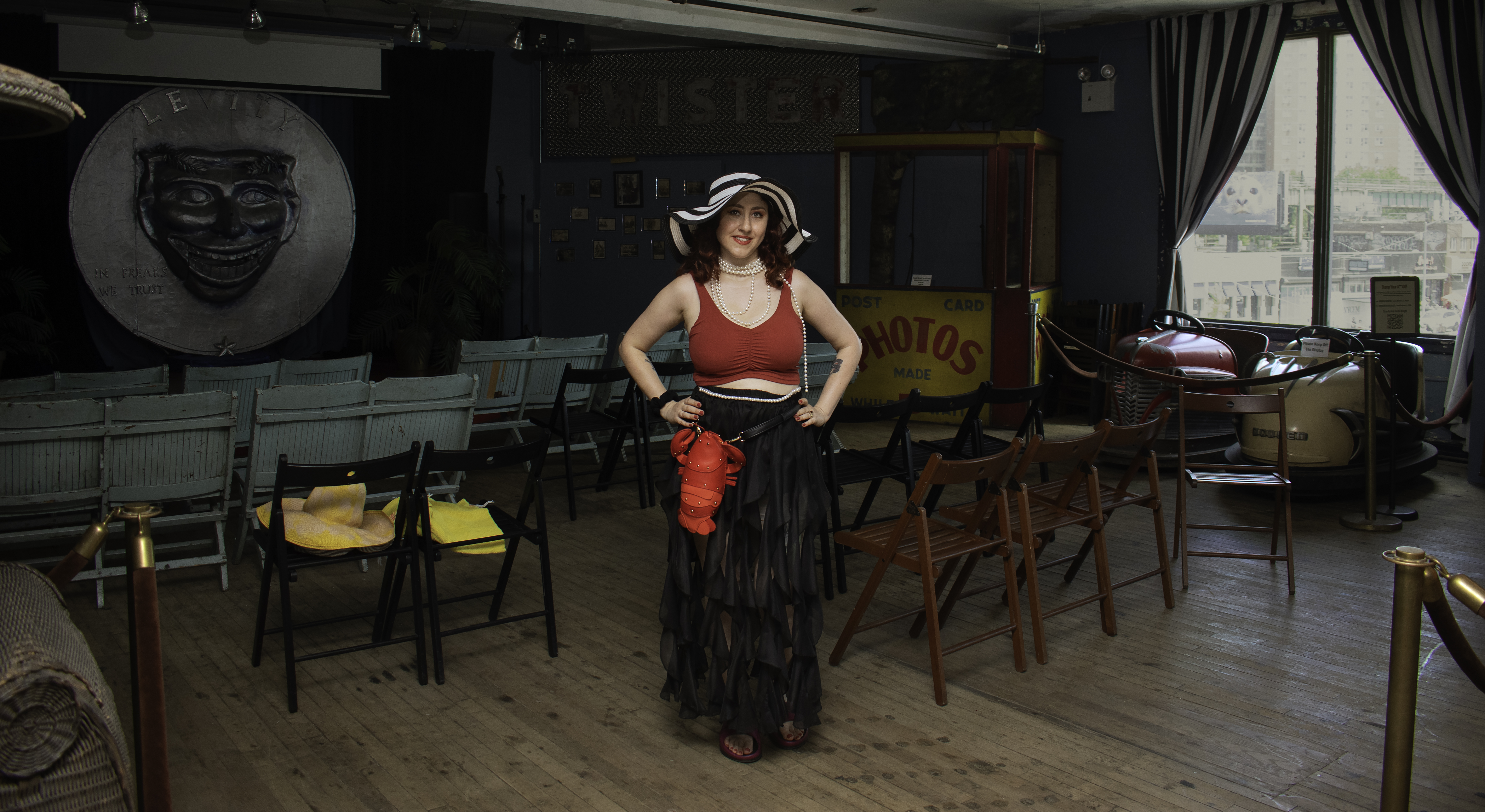
Keri Sheheen
KG: What do you do here at Coney Island, and how did you get into it?
KS: My name is Keri Sheheen, I am a multidisciplinary artist, and I started working with Coney Island USA by doing markets. I sell my artwork on t-shirts, and I make wooden wall art and tote bags. One of my friends, Maggie, thought my art would do well in Coney Island and she connected me with the market. I had this design, a skeleton mermaid, and the woman who runs the gift shop saw it and wanted it to be the parade shirt for 2018. In 2022 I got contacted by Adam Rinn, the creative director, to do the parade banners. I’d never really painted but I said “sure, I’ll paint your parade banners, that sounds fun.” I painted the first banner that marches, and the judges stand and bribery banners. This is now my fourth year doing it.
KG: Would you like to talk about the banners you made this year?
KS: I made four banners this year. I made a new lead banner because the 2021 one is now in the New York Historical Society. I made a new one with this blue mermaid with green hair, and then I did the king and queen banners; usually a notable person in music or the art scene, their tradition is to open up the beach for the summer.
KG: What’s your process for making these banners, from the conception of the design to the finished product?
KS: I use the same color scheme every year, the classic carnivalesque red, yellow, teal. If I’m doing a banner that goes down the parade, it’s word-focused because that’s what people need to see. So, I’ll take the words and then draw around that. I do the black outline first, digitally, then I get the transparency made, I project it onto the banner, trace it, and then it’s kind of color-by-number from there. I’m often in crunch time, but it’s a pretty quick process. Usually they’re ten foot banners and they take a couple days to finish.
KG: And it’s a different design every year?
KS: They reuse the judges stand every year and a couple times they’ll change the lead banner. The king and queen banners are different every year.
KG: In terms of style, do you mostly borrow from traditional circus aesthetics? How much of it is your own personal style?
KS: It’s definitely inspired by sideshow banners. In my style, I do pretty heavy black linework. I’m inspired by tattoo styles, R [Robert] Crumb illustrations, and screenprinters. They all kind of merge together to me. I don’t think I have a style, but other people tell me “oh, I saw that and immediately knew it was yours.” I think of it more as paying homage to the sideshow and its history.
KG: I find it very cool that you hand paint the banners. What do you think is special about doing it this way?
KS: Well, what I love about Coney Island USA is that it keeps that tradition alive. They’re an arts organization that cares about history. All the sideshow performers here do traditional acts that have been performed for hundreds of years now.
KG: When you think about it, the human body is so central to the circus and the spectacle of performance, so to preserve that element even in the art is impressive.
KS: Sign art is an art in itself. I’m so happy to work with an organization that still keeps those alive, because we’re in a digital age, and it’s not really a thing anymore.
KG: Can you tell me a little about the Mermaid Parade itself?
KS: The mermaid parade started in 1983 by a man named Dick Zigun, who is one of the founders of Coney Island USA. He was inspired to do it because in the early 20th Century, they were having Mardi Gras parades in Coney Island. The first one was a fundraiser because a home for wayward girls burned down, and they wanted to raise money for them. People loved it and they were doing it every year until 1956, when people weren’t coming to Coney Island as much anymore. But now it’s cool to see it thriving again for the last 43 years. Everybody’s costumes are amazing, it’s like Halloween in the summer! You have to be there to experience it. It’s a celebration of creativity and I’m so happy to have been a part of it for the past four years.
KG: Is this something you’d like to keep doing?
KS: If they hired me all year round to paint banners, I would do it. I’d paint banners for them any time, for the rest of my life if they want me to. The studio is right behind the museum, so this is my view when I paint. I just hear the screams of children on rides and it’s very cathartic.
KG: Do you have a favorite poster that you’ve made for the mermaid parade?
KS: Definitely “Prepare to be Judged.” It’s on the judges stand, and it has two big, glaring, George Orwell eyes on it. They had it on t-shirts and wooden plaques in the gift shop. It’s a crowd pleaser.
KG: What are your thoughts on the Save Coney Island initiative?
KS: They want to build a casino here, take up half the amusement area, and knock down buildings. The property owner, Joseph Sitt, owns this property right across from us. It’s been an empty lot for about a decade now, it’s rat infested, it’s sitting empty and contributes nothing to the neighborhood. He doesn’t care about the neighborhood, and he’s the one that wants to build a casino. My concern is that with construction going on around a hundred year old building, it’s going to get destroyed. But he doesn’t care about that, he doesn’t care about the community. A casino is a bad idea, and it doesn’t contribute anything to the community. A couple years ago, there was talk about doing a recreational center–something to enliven the neighborhood and keep it family friendly, as it is now. But a casino is not going to do that.
We’ve been to a couple meetings about it, and those in favor of the casino want it because they’re in need of jobs. He [Sitt] is dangling a carrot in front of the community, saying “we have a casino for you, and that’s the only option.”
There’s a petition, it has over 10,000 signatures and it keeps growing. We’re really fighting to save Coney Island as it is.
KG: Especially considering this casino would be right across the street from the Coney Island museum.
KS: Yes. It’s happening everywhere. These developers just make their money and leave, and they don’t care about the community. What do we have if not community? The community are the ones running these events, making it fun for families and catering to artistic expression.
Right now, they’re talking about demapping the streets. They want to build sky walkways over the streets here, so you don’t have to interact with the area at all–you just never leave the casino. That sets a really ugly precedent for developers to own public streets. It seems like a lot of politicians are getting paid off to let this happen.
They had a press conference where they had a mock funeral for the Mermaid Parade, with a casket and everything. If the casino goes through, it could end the parade.
KG: Is there anything people can do to help, in addition to signing the petition?
KS: Some of the community meetings have a Zoom option, so you can attend, and just having your presence there is a good thing. There’s an amazing “No Casino” poster by Spencer Alexander; signing into Zoom and putting that as your background to show opposition to the casino is all we can do at this point, unfortunately.
Maggie McMuffin
KG: Would you like to start off by introducing yourself, and telling us about what you do at the sideshow?
MM: I’m Maggie McMuffin and I am one of the outside talkers, as well as one of the inside working acts. I specifically do painproof and escapology acts. Painproof acts are when you do something that inflicts pain, but you’re so strong that you withstand it, like glass walking and bed of nails. For outside talking, I’m the person who stands on the bally and introduces the act and tries to draw a crowd.
KG: How did you get into this line of work?
MM: I’ve been doing burlesque for a while, and burlesque does have a linked history to sideshow through circus strippers. There’s lots of burlesque at Coney Island, like Burlesque at the Beach, the longest running burlesque series in the world. So I was doing burlesque and I met Adam Realman, the artistic director of Coney Island Sideshow. I got pulled into doing the talking outside and the Blade Box. They taught me a couple skills, and I put together some acts really quickly. The nature of Coney Island is that you’re doing so many shows a day that you workshop acts in real time, on a timeline that’s not provided to you in other performance artforms. Now it’s four years later and here I am.
KG: How do you prepare for your performances? Do you practice? How long does it take to get ready for the show?
MM: You have to just give yourself pep talks and, no matter what the day is, be able to jump into that energy of “I’m the most interesting thing, and let me show you these even more interesting things, let me talk about my friends.”
If I’m doing a straitjacket escape, it’s a lot of moving my body, wiggling my shoulders, twisting around, and holding positions. So for that I’ll have to do stretches and maybe take a couple preemptive Ibuprofen. For things like glass walking, every once in a while I’ll sift through my glass and make sure I remove the super tiny, slivery pieces. But for the most part, it’s just about setting my props and doing any personal internal work, putting on makeup and getting into costume. I live further away from Coney than the other cast members do, but I feel like I can rest on the train commute, and it’s cinematic, especially the last few stops, coming into view of the beach and the park. Once I get there, I’m in this space––the magic of the theater. Every theater has its own feeling to it, but Coney Island has such a rich history, it’s impossible not to feel it in that space, especially when you’re there to be part of that history.
KG: What has your experience been like performing at Coney Island, and how does Coney Island pay homage to the tradition of the sideshow?
MM: We are the last free-standing sideshow theater in the entire world. American sideshow is a specific thing, it’s one of the few purely American artforms, along with musical theater and what we think of as classical burlesque. It is interesting to be part of such a long standing, but still relatively new tradition. This isn’t opera, this isn’t standard dramatic theater. This still feels like something whose history is fairly new, but is older than other artforms.
With burlesque, we still have our burlesque legends, people who originated the artform or who were there in the very early stages of what we consider this artform to be. We can talk to them and we can learn from them. Whereas with sideshow, many people are gone, and also it has a contentious history because a lot of it was based on oppression and the exploitation of marginalized peoples, specifically people of color, trans people, and disabled people. We’re trying not to perpetuate those issues. Every disabled member of our cast has their own journey with that, and that’s for natural born performers to discuss. There are a lot of disabled performers who work in sideshow who are not visibly disabled, and they’re not necessarily considered “natural borns.” But for me, it’s very similar to being part of burlesque, where as a queer woman, this is a space where I could very easily be exploited, and instead, by deviating from the mainstream path, I can make my own choices and do things that I want to do.
KG: That leads into my next question––how much of your act is your own style, and how much of it follows in the tradition of the sideshow?
MM: There are some things, like Bed of Nails, that are hard to put your own spin on because there’s only so much you can do, so it really comes down to your presentation. For me, with walking on glass, I end my act by doing a handstand. I take my pile, turn it into three smaller piles, and I very pointedly put my hands and the top of my head into the glass. Right now, in my sphere, I’m the only one who does that.
In our straitjacket act, me and Cyclone Jack both do straitjacket escapes, but we do them very differently. I talk a little about the history of mental healthcare in this country and how it’s awful, whereas Jack can come out and go straight into “I’m a crazy, wacky guy,” which he is. Honestly, it’s really fun to see people do the same acts right next to each other and see how they can make them different.
KG: Going back to what you said about disabled and non normative bodies and how historically they’ve often had a problematic relationship to the sideshow, how do you think Coney Island reconciles or remedies that now?
MM: I think now, you have to really love sideshow to do it, because it’s not paying enough for people to do it out of survival anymore. People do it because they’re genuinely invested in the history, and there are also parts of it that are aided by being born different. A lot of contortionists have Ehlers-Danlos Syndromes (EDS), which enables them to be hypermobile and very flexible. They view it as taking advantage of their disability and turning it into a positive.
It's also a way for people who have facial or bodily differences to get on stage and be in control of their own narrative. It’s not to say that tokenizing doesn’t happen, it still happens in any performance arena, but they get to go on stage and say “Hey, look at me. No really, I’m giving you permission to look at me” and also “you paid money to look at me.” It gives them a place of power, rather than historically how these people would be bought from their parents and mistreated and put on stage by someone else who was taking the money.
KG: We’re trying to raise awareness about the Save Coney Island initiative. Do you have any thoughts on that?
MM: I grew up in casinos on the West coast. My mom worked in reservation casinos and her family is from Montana, where every corner building has slot machines. Casinos are not designed to be for the community. They are designed to be insular places that are there to take people’s money. And yeah, we’re carnies, we understand wanting to take people’s money, but we’re giving it back to the community and the family we’ve built there. A casino is figuring out ways to swindle usually impoverished people or people already at risk for addiction and risky behaviors, and give their money to the higher classes.
KG: What can people do to help out in addition to the petition?
MM: Call your local politicians, like Justin Brannan, and remind them of the power of the people. Especially right now, with Mamdani’s historic win of the primary, people really have hope in being able to enact change, and I think a lot of politicians need to be reminded that this could be the future. You could help your constituents and serve their own interests, not your own pockets.
KG: Any finishing thoughts?
MM: I love my castmates. I was fortunate to wind up in a cast with people who have really become family. That said, sideshow is not glamorous. It’s got to be something that you really love with your whole heart or it’s just not worth doing. I always say whenever I do closing bows, “Thank you so much for being here and supporting us, without an audience, a show isn’t a show. It’s just a bunch of idiots doing ill-advised stunts in front of their friends.”
KG: What made you love sideshow?
MM: I think it’s just the punk rock-ness of it all. Being polished means something different there. It just is an art form where you have to commit and be brave, and not be afraid of wounding your physical form. You have to be mindful of it, but scars are beautiful, they tell people where you’ve been and what experiences you’ve had. And you can be whoever you want to be. You can be your weirdest, wildest, most chaotic self, and the more that you commit to that, the more successful you’re going to be.
Lil Miss Firefly
KG: Would you like to start off by introducing yourself, and telling us about what you do at the sideshow?
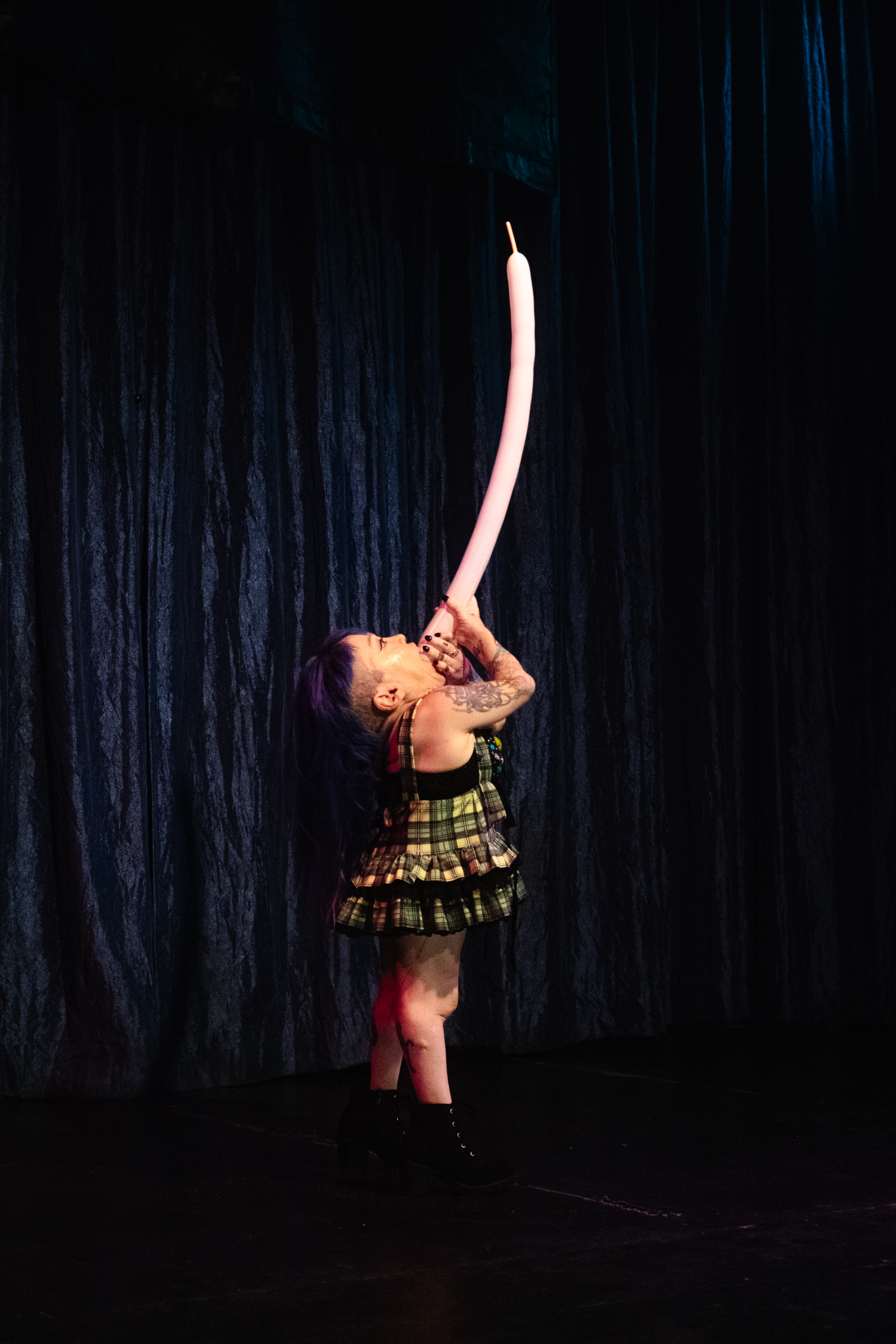
FF: My name is Lil Miss Firefly. I am 36 inches small, I’m a natural born performer, and I swallow balloons and escape from straitjackets.
KG: How did you get into this line of work?
FF: High school. I was given a book called My Very Unusual Friends that just changed my point of view on things. We were supposed to do a history project on WWII, so I learned about the sideshow and how it was an escape for people to go and forget about what was happening outside of the tent. And I fell in love with it.
KG: How do you prepare for your performances? Do you practice? Do you have pre-show rituals?
FF: I zone out. I call it the calm before the storm. When you go on stage, you never know what’s gonna happen on stage or how the audience is going to perceive [you]. I book my own stuff and I get all the checks, so I tell myself, “This is what I’m gonna do today. This is how many shows I’m gonna do today,” and that’s it.
KG: Do you switch up your acts every time?
FF: Sometimes. Today you saw me do balloon swallowing, yesterday I was escaping from a straitjacket. Straitjacket is more physically exhausting, every muscle in my body is being used. Balloon swallowing is not so easy because I can’t breathe when it’s in my mouth.
KG: How do you think Coney Island pays homage to the sideshow and incorporates history into its performances?
FF: Coney Island is the grind. In the early 2000s for me, we’d do ten shows, we kept going. Now it’s a timed show, which is awesome because I don’t think my body could handle that 8-hour day. But going back in time, when sideshow was first running it was like that. For me it's like going back in time. I mean we’re not in a tent or anything like that, but it’s the grind of it all. Also getting to meet new performers all weekend.
KG: How much of your act is traditional, and how much is your own spin?
FF: I tend to modernize my acts as much as I can. The balloon song is very modern, “Circus Psycho” by Diggy Graves, it’s very much like a club hit. All my acts are traditional with a modern twist. When I do glass walking, I do burlesque, and I do what I call a slip-n-slide, where I run across the stage and dive into the glass. I also do the splits and jump on it.
KG: We’re trying to raise awareness about the Save Coney Island initiative. Do you have any thoughts on that?
FF: One of the main reasons I’m here now is to help save it, because I don’t want this place to change, and I believe with a casino built right on top of it, it would change. Coming from Vegas, I can tell you, when you put one casino in, they all start popping up, and the people who live here are going to be pushed out. I saw it happen in Colorado, they started popping up and new sky rises were built, and they pushed out the mom and pop shops that Denver had to offer. I’m afraid that’s gonna happen here, if they do that casino.
KG: There’s a petition for people to sign, but do you know of anything else they can do?
FF: Sign the petition as much as you can. For me as a performer, this is the last thing that is authentic, and I don’t want to see that go away. Coney Island USA is also very LGBTQ friendly, and in sideshow itself, everyone is welcome. Being tiny, I didn’t get that from a lot growing up, but here it’s like “we love you.” All walks of life come through these doors to the shows and are performing on that stage. It’s beautiful, and I don’t want to see it go away.

Anna Monoxide
KG: Would you like to start off by introducing yourself, and telling us about what you do at the sideshow?
AM: My name is Anna Monoxide, I am a painproof clown. I do a bed of nails/blockhead combination act, and that involves a real bed of nails, which most people are familiar with, and blockhead, which is taking a regular nail and hammering it into your sinus cavity. I also do balloon swallowing, which involves taking a very long balloon and swallowing the entire thing, and then drinking cherry soda to wash it down.
KG: How did you get into doing this?
AM: I had always been interested in Coney Island from when I was a kid. I was fascinated specifically by the tattooed lady in the circus. I read an encyclopedia entry on circus sideshow tattooed ladies when I was seven and it blew my mind. Ever since then I’d wanted to be decorated in that manner, and now I am. But you can’t just be a tattooed lady in the circus anymore, you also have to do stuff. So I got some skills together so I could do both.
KG: How do you prepare for your performances?
AM: A lot of stretches for the bed of nails because I do flexibility poses on the bed of nails. So it’s a half an hour, at least, of stretching. But the real ritual of getting ready is really putting on my clown paint. Once I start getting the clown white face on, it’ll give me energy to do the thing. By the time it’s done, I’m ready.
KG: What has your experience been at Coney Island?
AM: Coney is the last sideshow standing that does grind shows, around here at least. It’s been amazing, I love everybody that works here. Got to meet some new performers that I’ve never met before. This is my first season of doing the grind shows every week, and I love it.
KG: How do you think Coney Island pays homage to the tradition of the sideshow?
AM: This particular theater has been used for circus sideshows since the early 1900s. We have a sign next to the entrance of the theater that honors historical sideshow performers throughout the years, what they did. It’s kind of like a hall of fame. We have the Coney Island Museum upstairs which showcases Coney Island History. Even just looking around at all the decor, you can see bits of history of Coney.
KG: How much of your act is traditional, and how much of it is your own spin?
AM: I’m doing traditional skills, but not in a completely traditional way because back in the day, people used to talk through their acts a lot. They had a microphone and it was more like a demonstration. For mine, a song is playing and I’m presenting the skills through movement.
KG: We’re trying to raise awareness about the Save Coney Island initiative. Do you have any thoughts on that?
AM: Sign the petition! Call the representatives that can help stop this. There are instagrams, there’s information on the Coney Island website and other websites that tell people the right things to say so we can show that we have enough steam behind us.
A lot of what makes Coney Island special is its character––that it’s offbeat and weird the way that it is. It’s not corporate, it’s run by weirdos for weirdos. So having some corporate casino here seems so wrong.
Resources: coneyisland.com/nocasino, @noconeycasino, @coney.island.usa
Cyclone Jack
KG: Would you like to start off by introducing yourself, and telling us about what you do at the sideshow?
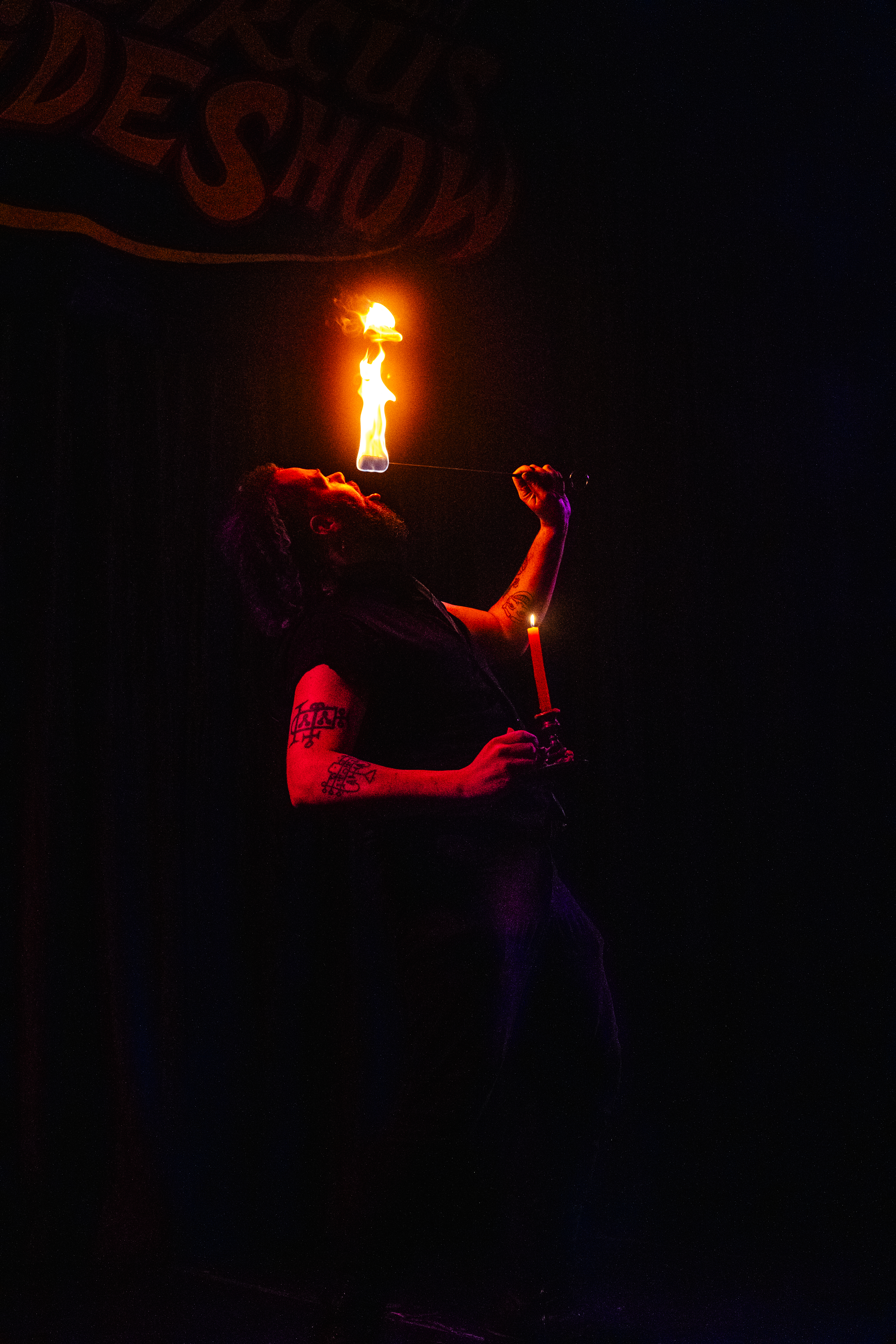
CJ: My name is Cyclone Jack Sullivan. I generally host, sometimes I get in the blade box, I eat fire, human blockhead.
KG: How did you get into this?
CJ: Since I was a kid I really loved magic. As an adult I decided it was too hard, so I’d rather just hammer a nail into my head. Being embarrassed by a magic trick going wrong seems so much worse than being embarrassed by a sideshow trick going wrong because at least if a sideshow trick goes wrong, I’m not there anymore to deal with it.
KG: Do you have a favorite act that you do?
CJ: I love doing fire. I really, truly love eating fire. It’s my favorite thing to do, period. That or hanging from hooks.
KG: How do you prepare for your performances? Do you have certain rituals that you do?
CJ: Yeah, we rehearse pretty intensely. I’m at rehearsal at least once a week. We do warm-ups, we make sure that we’re able to do this safely. But, we do this so often–4 shows a day–that doing the shows is like the rehearsal.
KG: What has your experience been like at Coney Island?
CJ: It’s been amazing, there’s no place like this. It’s funny, I ran into someone today who I was with at the very first show I ever performed at. This is where you come to do sideshow. In this field, this is the place to aim for. It’s been everything I could’ve hoped for and so so much more. I’ve travelled extensively since I got here, it’s upped my game significantly, compared to where I was four years ago. They keep the standards way higher for the performance here. I did my first show here about ten years ago, but that was just nightlife stuff. Being part of the core here is unlike anything else.
KG: How does Coney Island play homage to the tradition of the sideshow?
CJ: We are for better or worse the living history of Coney Island. We keep the sideshow going. We are the last one out here, keeping the show going all the time. We’re politically involved in fighting against the casino and making sure that Coney Island is sustained. And not in a backwards manner, not to remain traditional in a way that’s against progress. But quite the opposite. Moving forward has always been the thing for Coney. Incubators that they use in hospitals were invented on Coney Island as an attraction. There used to be a display here of babies in an incubator at a time when infant mortality was so high. It was like “Look at this, we have a bunch of alive babies! Is that not incredible?” It’s a checkered past, checkered present, checkered future, but it all kind of carries through, good or bad. It’s not sanitized, it’s not like Disney. We’re not trying to represent a version of history that’s totally whitewashed, nor are we trying to represent a whitewashed version of what we’re doing. We’re just trying to do our best and maintain the best of what we were, and make it into the best of what we can be.
KG: In terms of your act, how much of that is traditional, and how much of it is your own spin?
CJ: Everything’s got to be modernized in some way, shape, or form. When I do blockhead I include a power drill. The art is constantly evolving––there are new additions every day. Like my patter, when I started, it was completely different than it is now. The card trick I did today was the first time I’ve ever done that on this stage. It’s a magic act but it’s one that a magician wouldn’t perform that way.
We kind of have to alter everything we do here to fit what is essentially the very furthest edge you can push with a family friendly show. But as far as how traditional it is, we’ve gotten much more advanced in terms of techniques just because we’ve been doing it for as long as we have been. Having an international community of sideshow performers that didn’t exist before, we now share things, trade secrets, and have the ability to get really really advanced at what we do. Certain things do have to change with the times, because it’s impossible to do them. Like strong man acts, where they would rip phone books in half––nobody has a phone book anymore.
KG: We’re trying to raise awareness about the Save Coney Island initiative. Do you have any thoughts on that?
CJ: There’s so much to be said negatively about the presence of a casino out here. You go to the meetings and hear the pro side like, “Look at Atlantic City! Look at Vegas!” and I have looked at those places. The minute you step outside the hotels, it’s terrible. If you look at statistics for suicide, for living below the poverty line, Coney Island and Atlantic City are already comparable. So it would be exacerbating an already present problem. We need an infrastructure that isn’t based on taking advantage of the people that are already here.
KG: We know about the petition and calling local politicians, but is there anything else our readers can do?
CJ: Let ‘em know to come down. If you’re ever in New York City, don’t be afraid to come down to Coney Island and see what’s going on. We have programming throughout the year now. And really the thing that keeps us going is having people in the place. Show up, show face, and we’d be happy to have you!