


REVIEW: TANGO ENTRE HOMBRES - The Sky Is The Limit Theatre
Reviewed by Imogene Mahalia
The Sky Is the Limit Theatre’s Tango Entre Hombres is anything but traditional. On the contrary—Tango presents tradition to the audience, and then turns it on its head. It is a series of vignettes, expressed through multiple mediums. The show is about queer acceptance, dance, self-love, the immigrant experience, and Turkish coffee. Told trilingually in Spanish, French, and English, Tango Entre Hombres is touching and expressed through monologue, dialogue, dance, and dance as dialogue. There is comedy, drama, sobering moments of storytelling, and audience participation. About 10 minutes in, following a dance sequence, I was asked to read a slip of paper aloud. It said, “this is SO HOT! It’s like Heated Rivalry but HOTTER!”
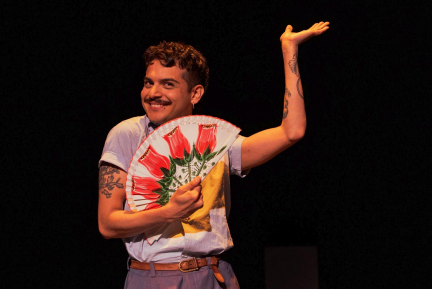
Photo: Emma Rosa
The play begins with a man walking onstage and addressing the audience as though they are members of a dance class. He describes the gender dynamics of tango, using Spanish terms, but defining them in French. He divides the audience by gender, asking the men to stand. They are told to repeat after him: “Yo soy tango.” The women are not made to stand. He instead addresses them, telling them that traditionally, in tango, there are two roles, Man and Woman. He says: “but I am a real feminist, and so I call them Leader, and Interpreter.” Of course, men still nearly always lead, and women almost always interpret. He tells us that in tango, there is a grand physical gesture, cabeceo, that men use to invite the women to dance with them. Women, conversely, are expected to respond more subtly, with mirada. They look away, or they look to their partner, but the acceptance or rejection is all in the eyes. The man blinks at us flirtatiously.
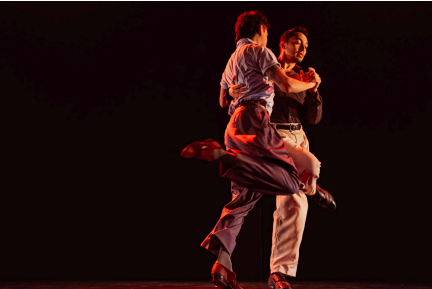
Photo: Emma Rosa
Tango Entre Hombres has three male-presenting actors, each playing multiple roles. In the context of this show, this has multiple meanings. While each of the three performers play multiple characters with a wide range of characteristics, they also occupy different roles in different contexts: they take turns in the dance sequences, playing both the leader and the interpreter. They must, of course—it takes two to tango.
About halfway through the show, one tango instructor tells the audience a story in Spanish. He speaks of when a man hired him for a three hour private lesson. He tells us that when the lesson began, the man refused to dance with him. “I do not dance with men,” he said. It is not simply an instance of the man refusing to occupy the role of interpreter; when the instructor offered him the role of leader, he still refused. He will not dance with men at all. The instructor asked us why this man might have even hired him in the first place.
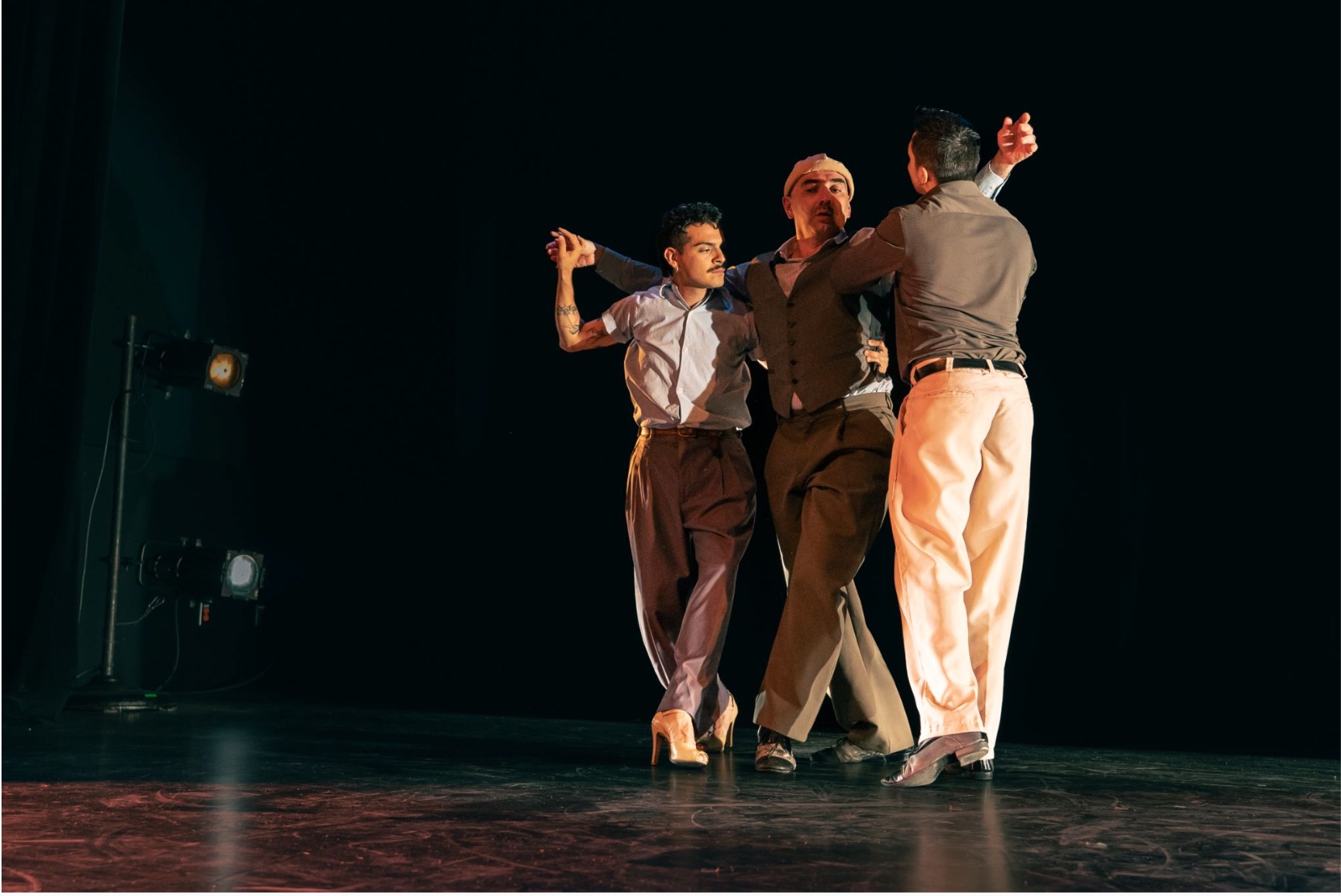
Photo: Emma Rosa
Tango Entre Hombres presents a panic commonly experienced by queer people of all ages—“Is that really me? I know better, I know better. Do I?”—and offers a narrative of exploration and acceptance. It takes two to tango—well, it takes at least two. The moments wherein the three men danced as a unit, handing off the lead and interpretation between the three of them as they swung and dragged their legs, lifted each others’ knees, gripped each others’ waists and arms, were spellbinding. Truly like Heated Rivalry, but better. The play is not about sex and love as much as it is about culture and the self. Tango Entre Hombres asks the audience to split their minds between four languages—the three spoken, the one of dance—and let the performers lift, carry, and lead us.