


Humor in Darkness: A Review of J.R. Stokes' Beautiful, Pam
By Sophie Decker
When Scatterbrain Magazine offered me the chance to write about an upcoming film, Beautiful, Pam, I honestly hesitated at first. While I had already contributed to several issues of the magazine, writing for our blog had remained unfamiliar territory. Besides–as I told writer and director J.R. Stokes this past January–I'm not a journalist. I certainly wouldn't call myself a film critic. Luckily for me, Beautiful, Pam is a striking work of storytelling, and J.R. Stokes is any writer's dream interviewee. We instantly bonded over our shared birthplace of Staten Island (God, this world is small), before launching into a conversation about his recent feature film. Stokes told me about how the project pushed himself to grow as a filmmaker, about the brilliant team he had assembled, and how he has learned to prioritize an empathetic approach to storytelling.
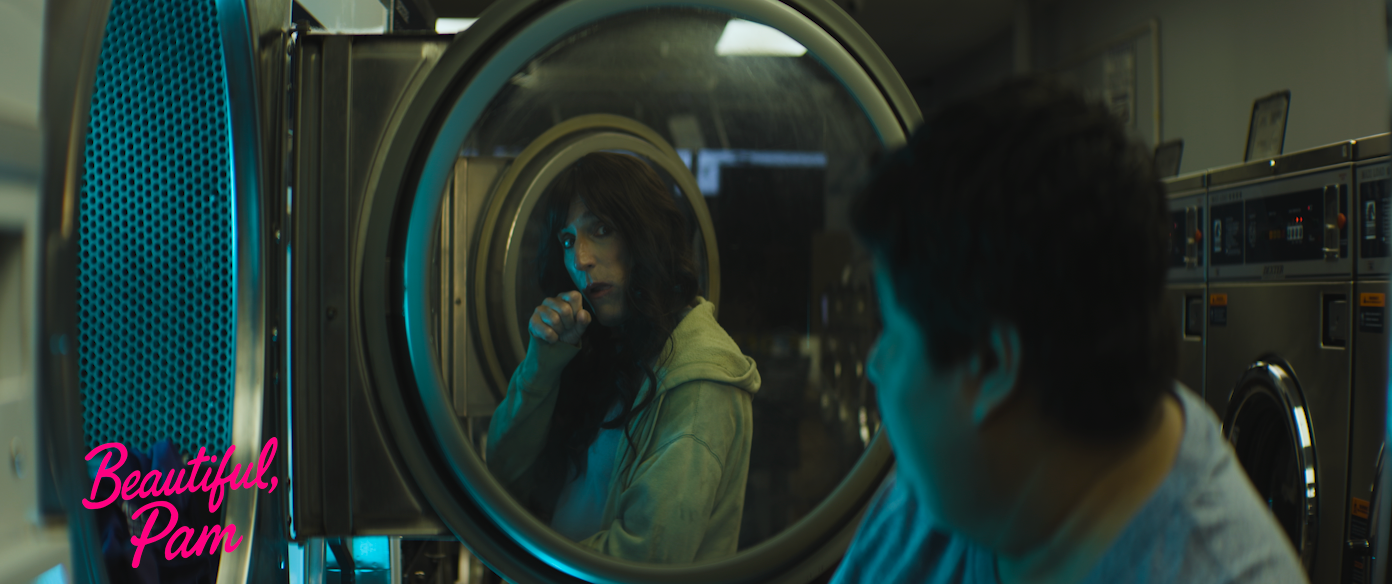
Beautiful Pam follows a queer sex worker who, in the days leading to their son's eighteenth birthday, finds themselves battling with identity, loneliness, and thoughts of suicide. I wouldn't classify Beautiful, Pam as a light-hearted watch–nor would I claim that it's entirely void of joy. As Stokes sees it, "life is not super sad all the time; life is also not really that funny all the time; life is kinda a bit of both. There's humor in the darkness and there's also a bit of darkness in humor." Throughout the film, Pam clings to their cynical perspective for security, finding comfort in a self-proclaimed "fucked up sense of humor." Just as Stokes describes, Pam experiences their share of lows–feelings of rejection and humiliation–making it all the more rewarding to see Pam enjoy tender moments with a new lover, Rose (Cadence Meier), or indulging in banter with friends, Beetle (Peter Konsevitch) and Lance the Crown (Kevin Leonard).
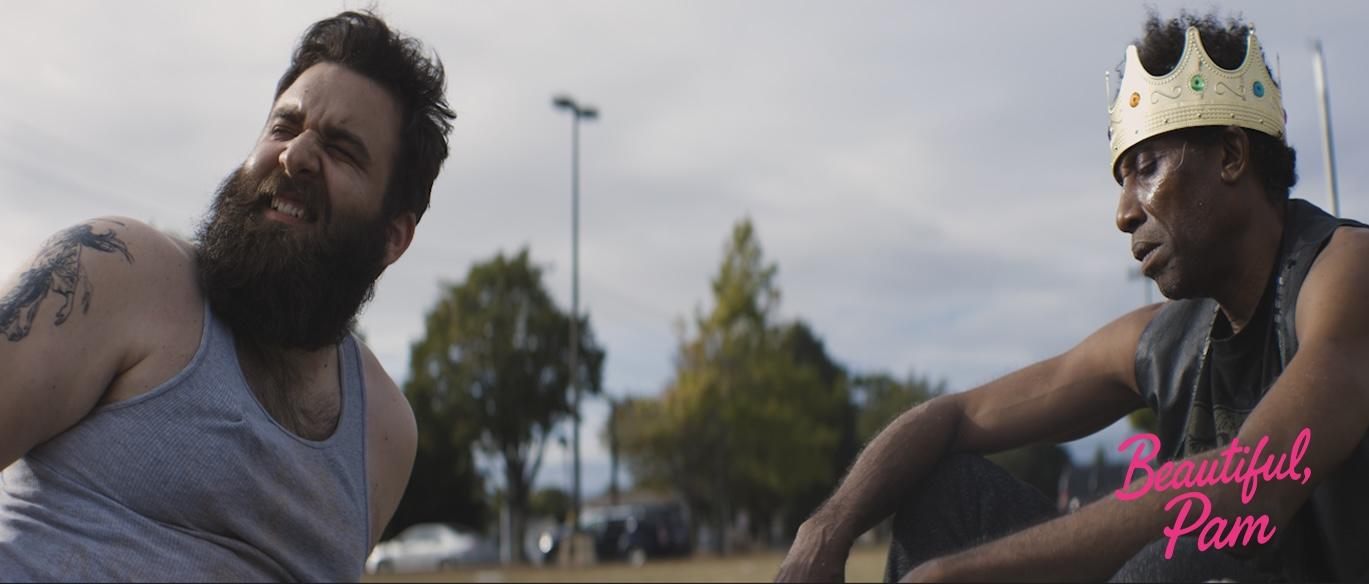
After my shock at discovering that Stokes and I once lived just a few miles from each other, I was further surprised to learn that he's only twenty years old. I couldn't help but ask whether he considered himself mature for his age, having written a story which portrays its intense themes with such an intentional level of sensitivity. Stokes shared with me his determination to "approach people and the world and especially storytelling with a sense of empathy." Perhaps this was the source of his "mature" viewpoint.
Indeed, Stokes' story required much research on the part of himself and actor Tom Ciorciari, who plays the titular role of Pam. Intent on portraying the life of a queer sex worker in an accurate, honorable way, Stokes regularly visited online chat forums, while Ciorciari spoke to real people in his community who resembled the character. Stokes had remained committed to this process, saying, "if I want to tell a story that feels real, I need to talk to real people and hear their stories." He revealed that he had already had Ciorciari in mind as he developed the character of Pam, as he felt inspired by Ciorciari's affinity for sarcasm and the actor's own sense of loneliness.
Stokes' close relationship with those involved in his film doesn't end there. Throughout our talk, he took the time to mention the majority of the cast and crew by name, highlighting the hard work done by everyone behind the scenes. He even gave a shoutout to his buddy Brandon, who had helped prepare Stokes' garage to be dressed for the set of Pam's motel room (also done by Stokes). During one scene in the motel room, we hear the film's only commercial track: "Promise" by Darian Maldonado. A good friend of the director, Maldonado had been asked to provide an original song reminiscent of Elliot Smith–one of many artists whom Stokes listened to while writing the script. His song effectively underscores the vulnerable, private moment (and practically begs to be released on streaming platforms). Finally, Stokes expressed his gratitude for Associate Producer Sara Stabile, who helped procure a number of shooting locations, and Intimacy Coordinator Alyssa Kelly, who helped guide the cast through physically-involved scenes.
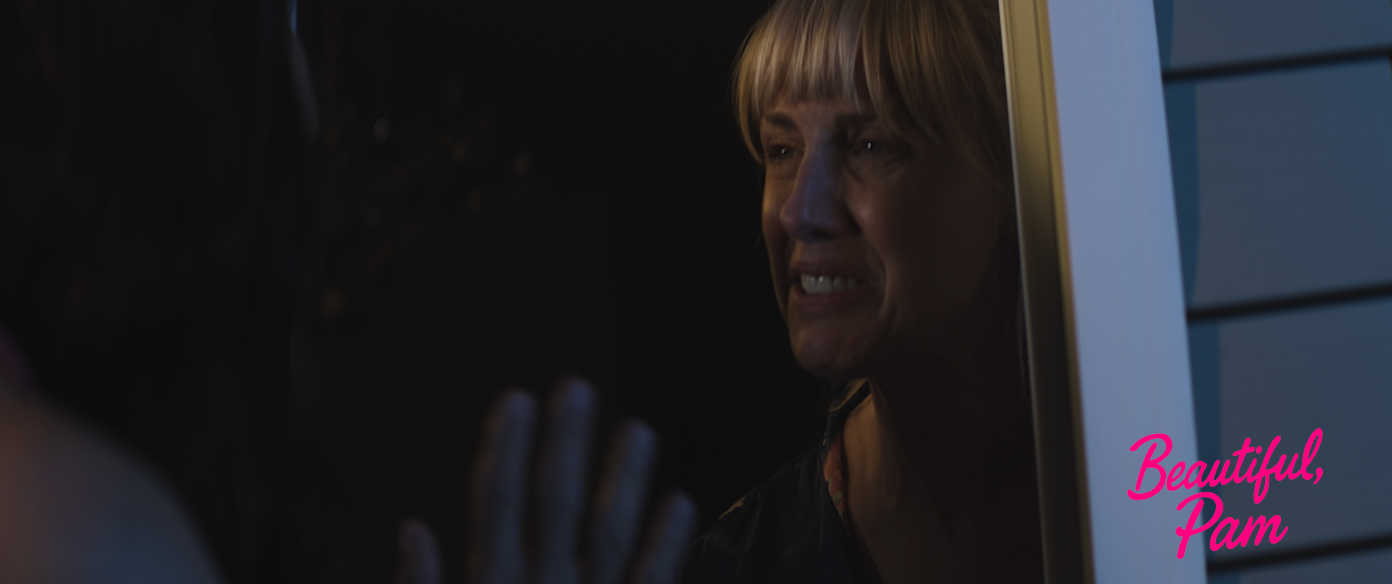
After the two of us equally fawned over the performances of just about everyone in the film, our conversation narrowed in on Stokes' experience of shooting and editing Beautiful, Pam. Not having gone to film school, there was a brief time when Stokes felt envious of his peers who had chosen to pursue higher education. He shared with me, however, that working on his first feature EdgeX in 2024 had allowed him to experiment with and refine his craft. He reflected on that early process, saying, "I would go home from shooting and I would edit all night, and I would be miserable cause I would be burnt out." When it came time to edit Beautiful, Pam, Stokes didn't want to fall victim to that same burn-out. Instead, he gave himself plenty of time to work, and focused his attention on putting together a story that felt honest. Approaching Beautiful, Pam as if it were a documentary, Stokes edited without following his exact script, and made sure to take breaks so he could frequently sit down to work with a fresh perspective. The result is a film that places us right in Pam's shoes, and demands us to confront their struggles face-to-face.
My last question for J.R. Stokes was a pretty obvious one, but I asked it nonetheless–what did he want audiences to take away from his film? He acknowledged that whether or not a viewer can necessarily relate to our protagonist, there are a number of aspects of the film which anyone can resonate with. After all, we don't need to resemble Pam to empathize with their pain. Helplessly, we watch as Pam suffers unique heartbreaks in tandem with universal feelings of loneliness, and we must ultimately witness their cries for help fall on deaf ears. At the film's close, we're left to wonder whether things would have gone differently, if only someone had really listened. Stokes puts it plainly: "what I really want is for people to take care of each other. [...] I think we're missing a lot of empathy in the world right now, and that's something we need more of." With this objective in mind, and supported by a team of creatives who share the same passion as himself, Stokes has been able to bring to life an incredibly moving story–one that truly is beautiful.

Beautiful, Pam will be premiering at Sayville Theater (Long Island, New York) on Saturday, March 21st. Tickets are available for $10 online at sayvilletheater.com and at the box office. Beautiful, Pam will also be available for free on Sunday night, March 22nd, on the @sidscinematics Youtube channel. Follow @sidscinematics on Instagram for updates on the film and future work!